Showing posts with label toyota. Show all posts

Saturday, July 23, 2011

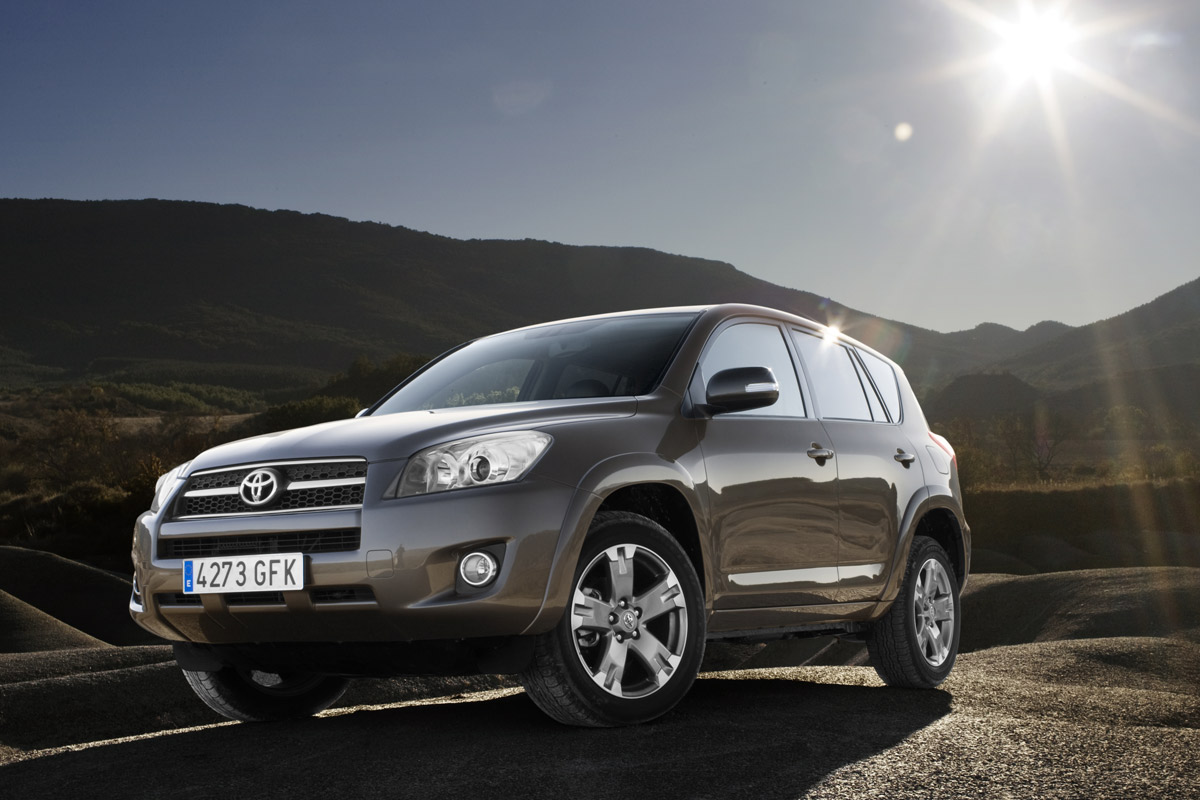
Toyota RAV4

The Toyota RAV4 is a compact crossover SUV from Toyota. It was the first compact crossover SUV, introduced in Japan and Europe in 1994 and beginning sales in North America in 1996. The vehicle was designed for consumers wanting a vehicle that had most of the benefits of SUVs, such as increased cargo room, higher visibility, and the option of full-time four-wheel drive, along with the maneuverability and better fuel economy of a smaller car. Its name stands for "Recreational Active Vehicle with 4-wheel drive", although not all RAV4s have four wheel drive, which is optional in some countries. The early success of the RAV4 paved the way for other compact SUVs such as the Ford Escape and the Subaru Forester. In most countries, the RAV4 is the only compact SUV from Toyota. In other markets, it is the crossover counterpart of the FJ Cruiser. Since the 2006 third generation model, Toyota has offered both short- and long-wheelbase versions of the RAV4. Short-wheelbase versions are retailed in Japan and Europe, with Australia and North America receiving the long-wheelbase versions. Toyota in Japan also sells the longer version as the Toyota Vanguard.

Attractive Toyota RAV4

The RAV4 was originally based on the Corolla platform,[citation needed] and was offered in both two and four-door versions. In the US, a 2.0 litre straight-4 producing 120 hp (89 kW) was offered. Both front wheel drive and all-wheel drive were available, and the RAV4 could be had with either a five-speed manual or four-speed automatic transmission. In 1998, the RAV4 was slightly restyled on the front and rear fascias, and a soft-top two-door was made available. Power was increased slightly to 127 hp (95 kW). In 1999, the two-door hardtop was dropped from the American lineup, leaving the 4-door and soft-top models.

Strong Toyota RAV4 In Blue Color

The second generation RAV4 went on sale in the middle of 2000, and came in base Edge and upmarket Cruiser models (model designations may vary according to market), in both 3- and 5-door configurations. The main differentiation between the two models was in appearance. Edge models came with unpainted grey bumpers and side cladding, mirrors, and door handles, and featured steel rims. Cruiser models gained body-coloured (painted) bumpers and moldings, mirrors, and door handles, alloy wheels, and ABS brakes. All models came equipped with a brand-new 2.0 litre 4-cylinder engine featuring VVT (variable valve timing), resulting in improved power and torque, as well as fuel consumption. Permanent all-wheel-drive was a feature. Options were ABS brakes (on the Edge), and air conditioning (on all models).

The third generation RAV4 is offered in two versions: a short- or a long-wheelbase model. The short-wheelbase model is sold only in Japan and Europe, with the long-wheelbase RAV4 sold in Australia and North America. Since 2007, the extended-length RAV4 is also sold alongside its shorter counterpart in Japan as the Toyota Vanguard, albeit with a revised front-end body work incorporating a revised grille, bumper, bonnet and headlamps.

Toyota RAV4 Interior Concept

Toyota RAV4 Steering Wheels

The vehicles were built in Toyota's Tahara, Aichi assembly plant, and under contract by Toyota Industries in its Nagakusa, Obu, Aichi plant. Beginning in November 2008, the North American vehicles were built in the Toyota Motor Manufacturing Canada Inc. Second Plant. Beginning in March 2009, Chinese models began production in by Tianjin FAW Toyota Motor Co. Ltd.‎ in a joint-venture plant in Tianjin, China.

Friday, July 15, 2011

US Government offers Concessions to Detroit Big 3's Trucks Models


According to a report from The Wall Street Journal, the US government is willing to allow carmakers to lower the Corporate Average Fuel Economy (CAFÉ) of their future trucks and SUVs at a slower rate than normal cars.
In return, the Obama administration wants to reach a deal by early next week that will allow the government to improve mileage standards from today’s target of 35.5 mpg (6.6 lt/100 km) by 2016 to 56 mpg (4.2 lt/100 km) by 2025 for both cars and light trucks, leaving the automakers a longer period of time to bring their large trucks, pickups and SUVs in line.

Thursday, July 14, 2011

New Gen Y Buyer Survey Spells Trouble for Detroit


Auto pricing website TrueCar studied the car buying behaviour of four million Gen Y (18 to 27 year-old) over a twenty-four month period and here’s what they found.
Scion took the crown for top brand, with 37.4% of the market and for top model (the tC coupe), with 21.2%, while second place went to Mitsubishi (32.1%) and their Lancer sedan (20.3%).
Mazda was the third most visited brand for Gen Y buyers, though only 17th in terms of model. The top four vehicle choices were Japanese, with a German in seventh place and a South Korean in ninth.

Toyota and Honda want to Win Back Sales Share from Hyundai Sonata with New Models


Not too long ago, if someone told you that a South Korean model would challenge America’s best selling sedan, the Toyota Camry, you would have probably laughed in his or her face.
Needless to say, a lot has changed over the past few years with Hyundai and in particular its latest Sonata sedan, not only challenging, but this past May even surpassing the Camry in U.S. sales for the first time in history.
Of course, the fact that Toyota’s production capabilities were seriously affected by the aftermath of the March 11 earthquake, tsunami and nuclear disaster in Japan, played a significant role in Hyundai’s accomplishment.

Wednesday, July 13, 2011

2012 Toyota HiLux Pickup Truck gains Refreshed Looks and More Powerful Diesel


Toyota has blessed its European market HiLux pickup truck with a mid-life facelift for the 2012 model year. The cosmetic surgery starts with the exterior that gains a redesigned front end sporting a different grille dressed in chrome, new bonnet, headlamps and front bumper. The changes continue with the redesigned front and rear wings, a new crop of 15- and 17-inch steel and alloy wheels, plus new door mirrors.

2012 Toyota Yaris: New Gallery with 86 Photos and UK Pricing


Toyota today announced prices for its next generation Yaris hatchback in Europe including the UK where the supermini is available for order now with first customer deliveries to take place in September.
The new Yaris is available in three- and five-door body styles with British buyers offered a choice of four grades (T2, TR, SR and T Spirit) and three engines including 1.0 and 1.33-litre petrol units and a 1.4-litre D-4D turbodiesel. On-the-road prices start from £11,700.

Tuesday, July 12, 2011

Mercedes-Benz Tops Secret Shopper Study of U.S. Dealers, Lincoln Places Last in Luxury Segment


Mercedes-Benz dealers were number one for customer treatment in the US according to an independent study by survey company Pied Piper. The California-based company hired 3,524 “secret shoppers” and sent them to US dealerships in order to determine how their salesmen were performing in anything from explaining a car’s features to closing a deal.
This is the third year in a row that Mercedes-Benz, which looks set to top the sales charts this year in the luxury segment, has topped Pied Piper’s study.

Wednesday, June 1, 2011

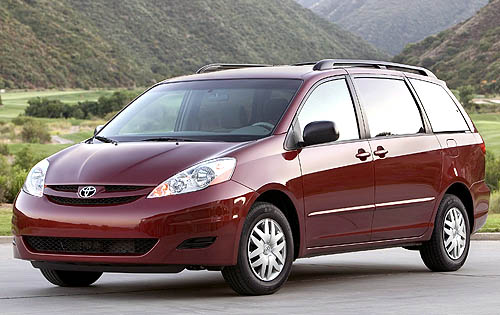
Toyota Sienna

The Toyota Sienna is a family minivan currently manufactured by Toyota at Toyota Motor Manufacturing Indiana in Princeton, Indiana, United States for the North American market. It replaced the first-generation Previa van in 1997 with a more conventional front wheel drive layout and shares a heavily revised platform with the Camry. Both the Previa and original Sienna were smaller than the other minivans they competed against, but a redesign in 2004 increased the dimensions to match those of its competitors. The Sienna is currently the only minivan in its class to offer all-wheel-drive. It was redesigned a second time for the 2011 model year. The third generation Sienna was put on sale in the US in February 2010 and is the first Sienna to ever receive a "Top Safety Pick" award from the Insurance Institute for Highway Safety.In late 1997, Toyota launched the front wheel drive MY 1998 Sienna in the North American market as a replacement for the mid-engined Previa. The Sienna debuted with a 3.0-liter 1MZ-FE V6 engine rated at 145 kW and 284 N·m (209 lb·ft) of torque. Built on an extended platform of the Camry, the Sienna was appropriately marketed as the "Camry of minivans," capitalizing on the Toyota Camry's popularity and reputation. It came in three trim levels, CE, LE, and XLE. The LE and XLE models were equipped with 2nd row captain's chairs while the CE models came equipped with a 2nd row 2-passenger bench seat. The driver side sliding door and roof rack were standard on the LE and XLE models, but were optional on the CE models. The XLE models offered leather seats and a wood trim package. The Sienna also touted best-in-class fuel economy of 16 city/22 highway miles per gallon. It was built in Georgetown, Kentucky. A year after its release, the Sienna faced new competition from Honda's redesigned Odyssey minivan, which was larger and offered a V6 like the Sienna.For the 2001 model year, the Sienna underwent a mid-cycle refresh. This update included a facelift to both front and rear fascias which added a redesigned front grille and bumper along with revised rear taillights sporting a more modern appearance (clear-lens turn-signals as opposed to amber-coloured). Toyota also revamped the center console area to add more usability to the HVAC controls along with new locations for the accessory switches (rear vent, power sliding doors, heated seats). The engine also came equipped with a variable valve timing feature VVT-i boosting output to 210 hp (157 kW) and 220 lb·ft (298 N·m) torque. The driver side sliding door became standard on all models, although the roof rack remained optional on the CE models.

Luxury Red Toyota Sienna

In January 2004, the second-generation Sienna was unveiled at the Detroit Auto Show. Production shifted to Princeton, Indiana, and the former Georgetown plant was retooled to build the second generation Camry Solara. To make the redesign more successful, Toyota assigned Yuji Yokoya as chief engineer on the new Sienna project. Yokoya and his family drove the previous Sienna over 53,000 miles (85,000 km) throughout North America to find weaknesses from the previous model. The new redesign continued to offer the CE, LE, and XLE trims along with a new, more luxurious, leather-trimmed XLE Limited model. The most distinguishable difference on the XLE Limited model is the horizontal chrome bar placed above the rear license plate. All Siennas were now powered by an updated ULEV certified 3.3-liter 3MZ-FE V6 engine paired with a new 5-speed automatic transmission. The gear-shift lever was also moved from the steering column to the lower-center center console area, and moved in a zig-zag pattern similar to the Lexus RX. New styling allowed for a coefficient of drag figure of 0.30 Cd. Fuel economy was rated at 17 city/25 highway (16 city/22 highway for AWD) under revised EPA estimates. The Sienna comes standard with anti-lock braking, brake assist, electronic brakeforce distribution, traction control and a tire-pressure monitor. Side torso airbags, and side curtain airbags were standard on certain 2004 and 2005 model trims while optional on others, but became standard on all 2006 trims. Vehicle Stability Control initially optional on lower trims became standard for 2008 models. The IIHS gives the Sienna an overall "Good" score in their frontal offset crash test with "Good" marks in all six measured categories. All 2006 models and later receive a "Good" overall score, while pre-2006 models without side airbags receive an "Acceptable" score for side impacts.

Toyota Sienna Newest Interior Design

Toyota Sienna Dashboard View

The redesigned MY 2011 Sienna premiered at the Los Angeles Auto Show in early December 2009. It was designed at Calty studios and engineered at Toyota Technical Center in Ann Arbor, Michigan. The new Sienna arrived at dealers in February 2010. The Sienna will be offered in five trim levels, the Sienna grade, LE, XLE, Limited and for the first time the SE trim. The new SE offers revised bodywork, "Altezza" style clear tail lamps, 19-inch wheels, firmer suspension and revised steering tuning for a sportier ride. All-wheel-drive is only available with the V6 engine on the LE, XLE and Limited model trims. The previous 3.5-liter 2GR-FE continues, but for the first time the Sienna offers a four cylinder, the 1AR-FE. An Electric Power Steering (EPS) system replaces the previous hydraulic power steering system. Toyota expects EPA-estimated mileage figures of 19 mpg city/24 mpg highway for models powered by the 4-cylinder engine, 18 mpg city/24 mpg highway for 2WD V6 models ,and 16 mpg city/22 mpg highway for AWD models. An optional tow package for V6 models is rated to tow 3,500 pounds (1,600 kg). New features include an optional sliding second row with "Lounge Seating" recliner style chairs, a feature previously seen on the Lexus LS, and Toyota's keyless Smart Key System with push-button start. The rear seat entertainment option now uses a 16.4-inch LCD screen which operates in two view modes, a single 16:9-ratio widescreen or two separate 4:3-ratio split screens with separate wireless headphones. For safety the back-up camera comes with a new 180Âş panoramic view. Other new options include a Pre-Collision System (PCS) as well as an automatic highbeam dimmer, Safety Connect and a more advanced stability control system known as Vehicle Integrated Dynamics Management. A driver's knee airbag is now standard as well.Toyota is the first automaker to offer a factory installed auto-access seat for disabled people. The one-touch rotating, power ascending/descending lift-up seat can lower to within 19 inches of the ground.

Friday, May 13, 2011

Toyota Prius

Prius is a Latin word meaning "to go before". According to Toyota, the name was chosen because the Prius was launched before environmental awareness became a mainstream social issue. In February 2011, Toyota asked the public to decide on what the most proper plural form of Prius should be, with choices including Prien, Prii, Prium, Prius, or Priuses. The company says "it will use the most popular choice in its advertising" and on February 20 announced that "Prii" was the most popular choice, and the new official plural designation. In 1995, Toyota debuted a hybrid concept car at the Tokyo Motor Show, with testing following a year later. The first Prius, model NHW10, went on sale on December 10, 1997. It was available only in Japan, though it has been imported privately to at least the United Kingdom, Australia, and New Zealand. The first generation Prius, at its launch, became the world's first mass-produced gasoline-electric hybrid car. The NHW10 Prius styling originated from California designers, who were selected over competing designs from other Toyota design studios. In the United States, the NHW11 was the first Prius to be sold. The Prius was marketed between the smaller Echo and the larger Corolla. The published retail price of the car was US$19,995. The NHW11 Prius became more powerful partly to satisfy the higher speeds and longer distances that Americans drive. Air conditioning and electric power steering were standard equipment. The vehicle was the second mass-produced hybrid on the American market, after the two-seat Honda Insight. While the larger Prius could seat five, its battery pack restricted cargo space. The California Air Resources Board (CARB) classified the car as a Ultra Low Emission Vehicle (ULEV). Prius owners were eligible for up to a US$2,000 tax credit from their gross income. In contrast with the NW10, Toyota executives claimed that the company broke even financially on sales of the NHW11 Prius. European sales began in September 2000. The official launch of the Prius in Australia occurred at the October 2001 Sydney Motor Show, although sales were slow until the NHW20 model arrived.

New Toyota Prius Design

In 2004 the Prius was completely redesigned as a mid-size liftback, sized between the Corolla and the Camry, with redistributed mechanical and interior space significantly increasing rear-seat legroom and luggage room. The 2004 Prius is even more environmentally friendly than the 2001 model (according to the EPA), and is 6 inches (150 mm) longer than the previous version. Its more aerodynamic Kammback body balances length and wind resistance, resulting in a drag coefficient ( Cd) of 0.26. The development effort, led by chief engineer Shigeyuki Hori, led to 530 patents for the vehicle. Toyota debuted the new Prius (2010 US model year) at the January 2009 North American International Auto Show, and sales began in Japan on May 18, 2009. Toyota cut the price of the Prius from ¥2.331 million to ¥2.05 million to better compete with the Honda Insight, leading some to wonder whether increased sales of the Prius might come at the expense of sales of other vehicles with higher margins. Competition from lower priced hybrids, such as the Honda Insight, also made it difficult for Toyota to capitalize on the Prius's success. Its new body design is more aerodynamic, with the coefficient of drag reduced to 0.25 Cd. An underbody rear fin helps stabilize the vehicle at higher speeds. The estimated fuel-efficiency rating, using the U.S. EPA combined cycle, is 50 mpg-US (4.7 L/100 km; 60 mpg-imp). The Prius was the most efficient car powered by liquid fuel available in the U.S. in 2009, based on the official rating. Only the first-generation Honda Insight (2000–2006) equipped with a manual transmission attained a lower fuel consumption rate. The official UK fuel efficiency data for the Prius T3 is Urban 72.4 mpg-imp (3.90 L/100 km; 60.3 mpg-US), Extra Urban 76.4 mpg-imp (3.70 L/100 km; 63.6 mpg-US), Combined 72.4 mpg-imp (3.90 L/100 km; 60.3 mpg-US). The 1.8-liter gasoline engine (previously 1.5 liters) generates 98 hp, and with the added power of the electric motor generates a total of 134 hp (previously 110 hp). The larger engine displacement allows for increased torque, reducing engine speeds (RPM), which improves fuel economy at highway speeds. Thanks to its electric water pump, the Prius engine is the first consumer automotive production engine that requires no accessory belts, which also further improves its fuel economy. The electric motors and other components of the hybrid powertrain are also smaller and more efficient than the industry average. Toyota estimates the new inverter, motor and transaxle are 20 percent lighter. Disc brakes replace the previous rear drum brakes. In constructing the Prius, Toyota used a new range of plant-derived ecological bioplastics, made out of cellulose derived from wood or grass instead of petroleum. The two principal crops used are kenaf and ramie. Kenaf is a member of the hibiscus family, a relative to cotton and okra; ramie, commonly known as China grass, is one of the strongest natural fibres, with a density and absorbency comparable to flax. Toyota says this is a particularly timely breakthrough for plant-based eco-plastics because 2009 is the United Nations’ International Year of Natural Fibres, which spotlights kenaf and ramie among others.

Toyota Prius Exotic Exterior

The Prius Plug-in Hybrid is a demonstrator plug-in hybrid vehicle (PHEV) based on a third generation Toyota Prius (model ZVW30) outfitted with 5.2 kWh lithium-ion batteries, with an all-electric range of 13 mi (21 km). A global demonstration program involving 600 pre-production test cars began in late 2009 and is taking place in Japan, Europe, Canada, China, Australia, New Zealand and the United States. The Prius Plug-in is scheduled for retail sales in the United States in the second quarter of 2012 and will be initially offered only in 15 states. According to Toyota these are the states where nearly 60 percent of all Prius models are currently sold. The Prius Plug-in will be available in all remaining states one year later. In April 2011 Toyota opned its priority registration website for customers interested in ordering the 2012 Prius Plug-in Hybrid, even though the purchase price has not been announced. At the January 2011 North American International Auto Show, Toyota revealed the 2012 model year Prius v, an extended hatchback wagon, which features over 50 percent more interior cargo space than the original Prius design. Toyota also unveiled the Prius c concept, which in production form is expected to be cheaper and smaller than the current Prius hatchback. Toyota expects the Prius v to go on sale in mid- to late 2011, and a car based on the Prius c concept to enter production in the first half of 2012. Toyota plans to offer the U.S. Prius v version with a nickel-metal hydride battery pack similar to the 2010 model year Prius, and with two rows of seats to accommodate five passengers. The European and Japanese versions will be offered with a lithium-ion battery, with three rows of seats with accommodations for seven passengers. In the Japanese market the nickel-metal hydride version is expected to sell for¥2.35 million (US$28,400), and the lithium-ion version for ¥3 million yen (US$36,300). In May 2011 Toyota introduced the Prius Alpha in Japan, which is derived from the third-generation Prius. The Alpha is the basis for the five-seat Prius v planned for launch in North America, and the seven-seat Prius + planned for launch in Europe. The Prius Alpah is available in a five-seat, two-row model and a seven-seat, three-row model, the latter’s third row enabled by a space-saving lithium-ion drive battery in the center console. The five-seat model uses a NiMH battery pack. Deliveries of the Alpha will be delayed due to the effects of the 2011 earthquake and tsunami on production. Toyota announced it had received 25,000 orders for the Prius Alpha hybrid wagon and minivan models in Japan before the start of sales.

Thursday, March 10, 2011

2011 Toyota Crown

The Crown has evolved into a line of full-size luxury sedans by Toyota. The range was primarily available in Japan and some other Asian countries, originally designed to serve as a taxi. It was in later years sold in the United States during the late 1950s and up until 1971. The Crown is Toyota's oldest sedan still in production. It is outranked only by the Century and the Majesta in social status. The Crown is used by many Japanese companies as the company Limousine. Exports to Europe began in 1964 with the first cars going to Finland. Other European countries which saw imports of the Crown included the Netherlands and Belgium. The United Kingdom was another market until the early 1980s. It was also exported to Canada for a few years—1965–68. In many markets the Crown had become very expensive and was replaced by the Cressida when that model became available for export in the early 1980s.

Elegant 2011 Toyota Crown

Luxury 2011 Toyota Crown

Inside Of 2011 Toyota Crown

The new Crown is available in 5 different trim levels: the basic Crown Sedan; the Crown Royal series which is a more comfortable and luxurious car; the Crown Athlete series which takes the luxurious aspect of the Royal series but has more aggressive styling and sporty features; the Crown Majesta series which is larger and has more luxurious features than the Royal series; and the Crown Hybrid series which is a trim level designated for the hybrid V6 drivetrain. The Crown is one of the first vehicles to have a 3 Dimensional Satellite Navigation System coupled with G-BOOK and boasts many features that have not been developed by other luxury car makers.

2011 Toyota Crown Rare Seats

2011 Toyota Crown Modification

2011 Toyota Crown Machine

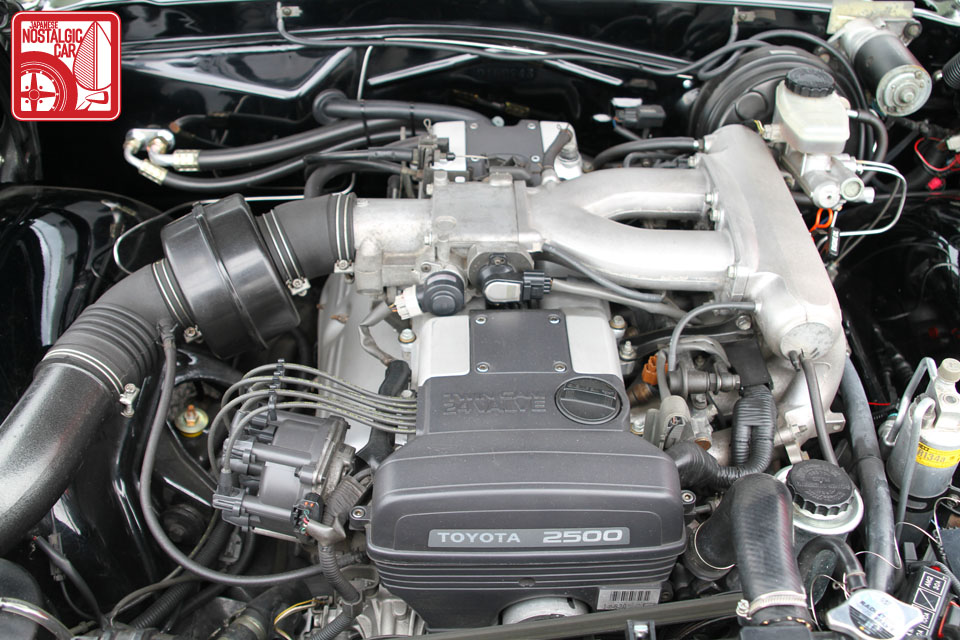
The Crown hybrid concept was exhibited at 2007 Tokyo Motor Show. In television commercials in Japan a song was written by composer John Harle titled "How should I my true love know?" The Crown is also manufactured by the Tianjin FAW Toyota Motor Co. Ltd. in Tianjin, China. Three petrol engines are available: the 2.5 L 4GR, the 3.0 L 3GR and the 4.3 L 3UZ. This is the first generation which does not offer a station wagon version. It is not known whether such a version will be available.

2011 Toyota Crown

The Crown has evolved into a line of full-size luxury sedans by Toyota. The range was primarily available in Japan and some other Asian countries, originally designed to serve as a taxi. It was in later years sold in the United States during the late 1950s and up until 1971. The Crown is Toyota's oldest sedan still in production. It is outranked only by the Century and the Majesta in social status. The Crown is used by many Japanese companies as the company Limousine. Exports to Europe began in 1964 with the first cars going to Finland. Other European countries which saw imports of the Crown included the Netherlands and Belgium. The United Kingdom was another market until the early 1980s. It was also exported to Canada for a few years—1965–68. In many markets the Crown had become very expensive and was replaced by the Cressida when that model became available for export in the early 1980s.

Elegant 2011 Toyota Crown

Luxury 2011 Toyota Crown

Inside Of 2011 Toyota Crown

The new Crown is available in 5 different trim levels: the basic Crown Sedan; the Crown Royal series which is a more comfortable and luxurious car; the Crown Athlete series which takes the luxurious aspect of the Royal series but has more aggressive styling and sporty features; the Crown Majesta series which is larger and has more luxurious features than the Royal series; and the Crown Hybrid series which is a trim level designated for the hybrid V6 drivetrain. The Crown is one of the first vehicles to have a 3 Dimensional Satellite Navigation System coupled with G-BOOK and boasts many features that have not been developed by other luxury car makers.

2011 Toyota Crown Rare Seats

2011 Toyota Crown Modification

2011 Toyota Crown Machine

The Crown hybrid concept was exhibited at 2007 Tokyo Motor Show. In television commercials in Japan a song was written by composer John Harle titled "How should I my true love know?" The Crown is also manufactured by the Tianjin FAW Toyota Motor Co. Ltd. in Tianjin, China. Three petrol engines are available: the 2.5 L 4GR, the 3.0 L 3GR and the 4.3 L 3UZ. This is the first generation which does not offer a station wagon version. It is not known whether such a version will be available.

Tuesday, March 1, 2011

2012 New Land Cruiser Troop Carrier

Toyota will release two types of cars new Toyota Land Cruiser. Marketing Director of PT Toyota-Astra Motor said, the provision of the Land Cruiser is the latest kind is done due to the needs of mining companies for the benefit of its mining operations.There are two types of Land Cruiser, which will launch the new Toyota Land Cruiser Troop Carrier manual diesel and Toyota Land Cruiser C & C manual

Tuesday, February 22, 2011

What a Charade...Daihatsu Takes Toyota Yaris Leftovers to Create a New Model

Daihatsu may be getting ready to pull out of the European market, but as a last call, the Japanese firm will introduce one more model to its range, the new Charade. And as you've probably guessed by now, the “new” Charade is in fact a Daihatsu-badged version of the outgoing Toyota Yaris, the successor of which, has already been introduced in Japan and will be showcased through a hybrid study in

First Official Photos of Subaru's Rear-Wheel Drive Coupe Concept

Subaru has released the first-ever teaser picture of its eagerly anticipated rear-wheel drive sports car concept ahead of its debut at the 2011 Geneva motor show on March 1. Even though Subaru's original ghost sketch of the car shows only a darkened outline of the front end, we managed to significantly brighten up the photo through some photoshop trickery and reveal the coupe's shape in full

Friday, February 18, 2011

Brain...Jammed Vandals Destroy Seven New Toyota Models at 2011 Chicago Auto Show

.fullpost { display: inline; } Auto shows seem to have become risky business for car manufacturers. After the BMW 750i that was stolen at the Detroit motor show earlier this year, now more disturbing news comes from the Chicago Auto Show, where the Toyota booth attracted unwanted attention. According to local newspapers, seven new Toyota models had their interiors vandalized by three young

Thursday, February 17, 2011

Brain...Jammed Vandals Destroy Seven New Toyota Models at 2011 Chicago Auto Show

Auto shows seem to have become risky business for car manufacturers. After the BMW 750i that was stolen at the Detroit motor show earlier this year, now more disturbing news comes from the Chicago Auto Show, where the Toyota booth attracted unwanted attention. According to local newspapers, seven new Toyota models had their interiors vandalized by three young men, aged 20, 21 and 28. We don't

Monday, February 14, 2011

Geneva Preshow: Toyota iQ Pure-Electric Prototype

.fullpost { display: inline; } An all-electric prototype of the Toyota iQ will make its European debut at the Geneva Motor Show in March. The iQ EV is equipped with an electric motor fed through a newly developed, flat and compact lithium-ion battery that is mounted under the car's floor. According to Toyota, the battery pack doesn't reduce the regular iQ's load area or passenger space. The

Geneva Preshow: Toyota iQ Pure-Electric Prototype

An all-electric prototype of the Toyota iQ will make its European debut at the Geneva Motor Show in March. The iQ EV is equipped with an electric motor fed through a newly developed, flat and compact lithium-ion battery that is mounted under the car's floor. According to Toyota, the battery pack doesn't reduce the regular iQ's load area or passenger space. The all-electric version of Toyota's

Sunday, February 13, 2011

2011 Toyota Matrix Freshens up for Chicago Auto Show

.fullpost { display: inline; } Toyota has chosen this week's Chicago Auto Show to stage the reveal of the 2011 model year Matrix. If you're having a hard time finding the styling differences between the 2010- and 2011-MY versions of the Matrix, that's because the revisions are barely noticeable. On the outside, the subtle refresh is limited to all-new front and rear bumpers with

Government Probe Finds no Link Between Electronics and Unintended Acceleration in Toyota and Lexus Vehicles

.fullpost { display: inline; } A 10-month long probe done by the National Highway Traffic Safety Administration and NASA found no link between software-driven throttles and unintended acceleration in Toyota Motor Corp vehicles. The investigation concluded that the previously suspected sticking accelerator pedals and loose floor mats are to blame for the unfortunate incidents, which